
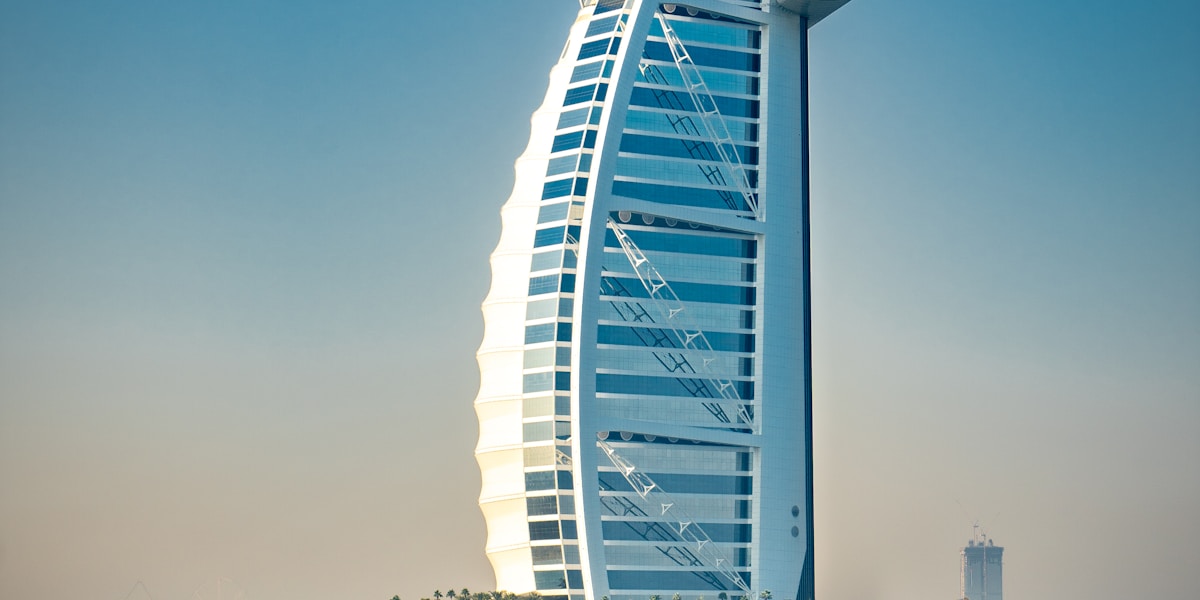
Dubai Property Transactions Jump 46.8% in Strongest Monthly Surge in 3 Years
16 July 2026 · Elyora Research
Dubai Records Its Sharpest Monthly Transaction Jump Since 2023
Dubai’s property market logged its biggest monthly transaction surge in three years, with deal volumes rising 46.8% in what Khaleej Times described as the strongest monthly rise since 2023. The data adds a notable counterpoint to a parallel narrative circulating in financial media: that while transaction counts in some segments have softened, prices have continued to climb , raising questions about the market’s underlying mechanics.
The transaction volume spike reflects a broad-based reacceleration in buyer activity, cutting across off-plan launches, secondary sales, and bulk investor purchases. According to Dubai Land Department data referenced in market reports, the month saw one of the highest absolute deal counts recorded in recent memory, suggesting that demand , particularly from international buyers , remains structurally robust even as the market enters what analysts describe as a more selective phase.
That selectivity is worth unpacking. Separate market data published this week indicates that in certain price bands, notably mid-market villa and apartment units, sales volumes have dipped as buyers grow more discerning about location, developer quality, and handover timelines. Yet prices in those same segments have held or risen, a dynamic explained by constrained ready inventory and a pipeline of off-plan units that will not deliver until 2027 and beyond. Supply, in other words, has not yet caught up with the demand that has accumulated since 2021.
What Is Driving the Surge in Deal Activity?
Several forces are converging to sustain transaction momentum. India continues to lead global online search interest in Dubai real estate, according to property portal data published this week, with the UK and Egypt also ranking among the top three source markets for inbound buyer inquiries. This international demand profile is not merely digital window-shopping: Indian, British, and Egyptian nationals have consistently appeared among the top nationalities completing actual transactions at the DLD, and the search data broadly correlates with completed deal flows.
The broader geopolitical context also matters. The brief period of regional tension earlier this year , linked to the Iran conflict , created a momentary pause in sentiment, particularly among high-net-worth buyers who adopted a wait-and-see posture. That pause now appears to have reversed sharply, with pent-up demand releasing into the market and contributing to June and July’s outsized transaction figures. Dubai’s positioning as a stable, politically neutral jurisdiction continues to attract capital that might otherwise have flowed to European or Asian markets.
Off-plan activity remains the dominant engine. Developers have maintained an aggressive launch cadence in 2026, with projects across Mohammed Bin Rashid City, Dubai Hills Estate, Dubai Creek Harbour, and Jumeirah Village Circle absorbing significant buyer interest. Payment plans stretching to handover and beyond , in some cases 60/40 or 70/30 post-handover structures , have lowered the effective entry barrier for international investors who might not qualify for UAE mortgage financing. That has widened the buyer pool considerably compared with the ready market.
The ultra-luxury segment is also punching above its weight. Data published this week shows ultra-high-net-worth individuals continue migrating to Dubai for its combination of zero income tax, residency pathways, and lifestyle infrastructure , and when they buy, they buy at scale. Single trophy-asset transactions in Palm Jumeirah, Emirates Hills, and Jumeirah Bay Island can meaningfully move aggregate transaction values in any given month.
The Price-Volume Paradox and What It Means for Buyers
The apparent tension between rising prices and reports of softer volumes in certain sub-markets is less paradoxical than it first appears. Dubai’s property market is not a single homogeneous pool: it is a collection of micro-markets segmented by community, asset type, price band, and buyer nationality. In some of those micro-markets , older apartment buildings in established areas without recent upgrades, for example , demand has cooled and transaction counts reflect that. In others , waterfront units, branded residences, new off-plan launches by tier-one developers , both volumes and prices remain elevated.
For investors tracking entry timing, the transaction data suggests that the broader market has not rolled over. A 46.8% monthly jump in deal count is not a figure consistent with a market in distress or even material correction. It is, however, consistent with a market that is maturing and differentiating: where the quality of asset selection matters more than it did in the 2021-2023 window, when virtually any Dubai property purchase produced strong returns.
Yields remain a key consideration. Ready units in well-located communities , JVC, Dubai Marina, Business Bay, Al Furjan , are still generating gross rental yields in the 6%-8% range according to market data, above the long-run average for comparable gateway cities. With mortgage rates for UAE residents now in the 4%-5% range, leveraged investors can still achieve positive carry in many configurations, though the margin has compressed relative to two years ago.
For investors assessing where to deploy capital in Dubai’s primary market , whether off-plan or ready , the transaction data published this week reinforces that demand fundamentals remain intact. Elyora’s advisory team tracks live launch pipelines and DLD-registered payment plans across the market’s key communities; current project listings are available at elyora.world/projects.
Frequently asked questions
Why are Dubai property prices rising if sales volumes have softened in some areas?
Dubai's market is fragmented across multiple sub-markets. While certain mid-market segments have seen quieter deal counts, constrained ready inventory and a large off-plan pipeline with distant handover dates limit supply. That imbalance supports prices even when volumes in specific categories dip. Overall transaction data for the broader market remains strongly positive.
Which nationalities are buying the most property in Dubai in 2026?
Indians consistently rank as the top foreign buyer group by transaction count, followed by British, Egyptian, Russian, and Pakistani nationals. Property portal search data published in July 2026 confirms India, the UK, and Egypt lead global online interest, which closely correlates with completed DLD transaction flows.
Is now a good time to buy off-plan property in Dubai?
Transaction volumes rising 46.8% month-on-month suggest strong market participation, not a buyer's market with distressed pricing. Off-plan remains attractive for investors who can access post-handover payment plans and accept a 2-4 year delivery window. Asset selection , developer quality, location, unit type , matters more in 2026 than in earlier boom years.
Get the latest Dubai opportunities
We save your details and an advisor shares off-plan deals that match your goals.