
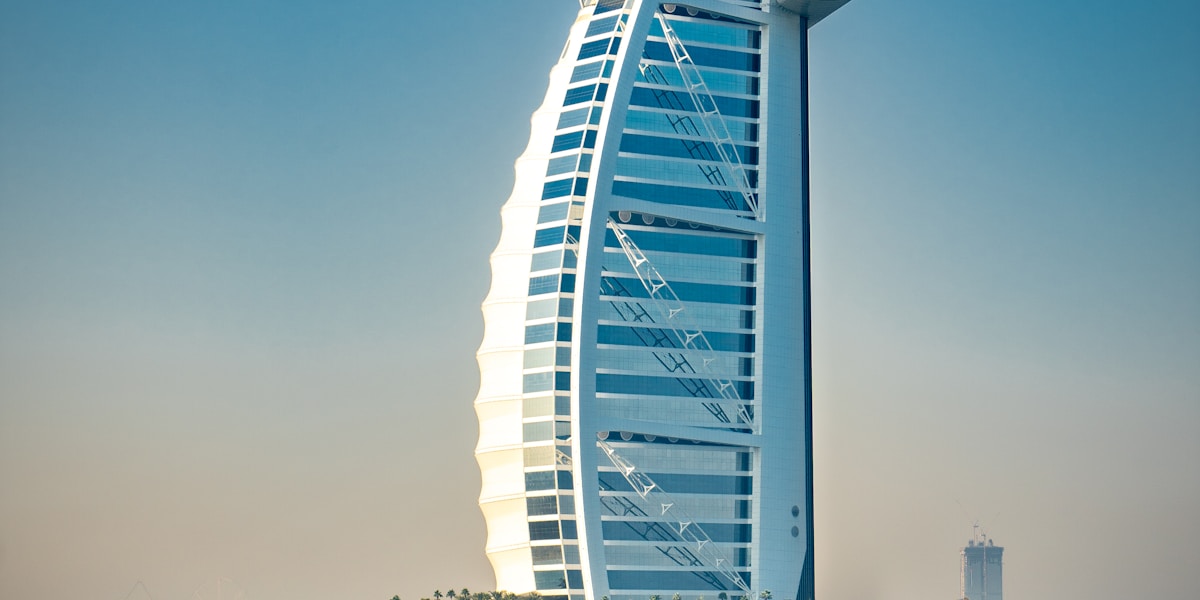
Dubai's Property Market Enters a More Selective Phase in Mid-2026
18 July 2026 · Elyora Research
Dubai’s Luxury Pullback: What the Data Actually Shows
Dubai’s property market has entered what analysts are calling a “more selective phase” in mid-2026, as a combination of geopolitical uncertainty and shifting buyer behaviour begins to filter through transaction data. Ultra-high-net-worth individuals (UHNWIs) , the segment that drove record luxury sales in early 2026 , have begun pulling back from the top end of the market, according to industry data, while broader residential prices softened in June.
The cooling at the apex of the market stands in contrast to the broader narrative of Dubai’s multi-year boom. After an extraordinary run that saw waterfront and branded residence prices surge well above pre-pandemic benchmarks, the luxury segment is showing the first meaningful signs of consolidation. Market reports tracking primary and secondary transactions note that buyer hesitancy at the Dh10 million-and-above price band picked up noticeably following the Iran-Israel conflict earlier in 2026, which rattled some internationally mobile buyers considering the Gulf region.
Moneycontrol and broader market analysis confirm that June 2026 data showed price softening across several established communities, though volumes have held relatively firm in the mid-market segment , suggesting the market is bifurcating rather than broadly retreating.
Is This a Correction, or a Natural Maturing?
Context matters here. Dubai’s residential market has delivered exceptional capital appreciation over the past four years, and some degree of moderation at the luxury tier is a structural feature of any maturing market, not necessarily a warning sign. Analysts note that the pullback from ultra-rich buyers is partly a timing phenomenon: many UHNWIs who were going to buy have already bought, having front-loaded acquisitions ahead of geopolitical uncertainty rather than retreating entirely from Dubai as a long-term destination.
The Khaleej Times reported this week that the UAE’s ultra-luxury segment continues to draw global wealth migration, with UHNWIs from Europe, South Asia, and the CIS region still actively seeking residency and assets in Dubai for stability reasons. The tension between short-term caution and long-term structural demand is a key theme heading into the second half of 2026.
What has changed is the pace of deal-making at the very top. Off-plan launches in the Dh5 million-plus bracket , which saw near-instant sellouts as recently as late 2025 , are now taking longer to clear inventory. Developers who had grown accustomed to launching and selling out within days are adjusting expectations, with some reportedly recalibrating payment plan terms to maintain momentum.
It is also worth noting a signal from outside the residential sector: U.S.-listed shipping company TOP Ships Inc. this week formally cancelled a Dubai real estate deal it had announced earlier, citing changed circumstances. While a single corporate transaction cancellation would normally be unremarkable, it adds to a broader picture of some foreign institutional and corporate buyers reconsidering or delaying commitments in the current environment.
What Mid-Market and Off-Plan Buyers Should Take Away
The more nuanced story for most investors is that the Dubai market is not moving in one direction. While the ultra-luxury tier cools, several dynamics favour the mid-market and off-plan segments:
Off-plan remains relatively resilient. Developers including Emaar, DAMAC, and Sobha have continued to launch projects with structured payment plans , typically 60/40 or 70/30 split across construction milestones , that reduce entry risk for buyers who cannot or will not pay cash upfront. The extended handover timelines common in Dubai off-plan (2027-2028 for projects launching now) mean buyers are pricing in a longer horizon during which the geopolitical noise may well dissipate.
Rental yields remain a stabiliser. Even as capital appreciation expectations moderate, Dubai’s gross rental yields , ranging from approximately 5% to 8% depending on community and asset type , continue to outperform comparable gateway cities. This underlying income story provides a floor for investor demand that is absent in markets driven purely by price momentum.
Monthly rental contracts at record highs. Economy Middle East reported this week that monthly rental contracts in Dubai have hit an all-time high, reflecting strong end-user demand in the residential leasing market. For investors buying for rental income rather than short-term resale, this is a constructive signal: the occupier market remains healthy even as the sales market recalibrates.
Abu Dhabi offers an instructive parallel. Neighbouring Abu Dhabi recorded Dh117 billion in property transactions in the first half of 2026 alone, according to Gulf News , a figure that underscores UAE-wide real estate appetite even as Dubai’s own market moderates at the top end.
The selective phase Dubai is entering is not unusual for a market that has delivered the kind of returns seen since 2020. The question for investors is whether the current pause at the luxury tier represents a dip within a longer bull cycle, or the beginning of a more sustained normalisation. Most market analysts currently lean toward the former, citing continued population growth, infrastructure investment tied to the Dubai 2040 Urban Master Plan, and the UAE’s structural advantage as a politically neutral destination for global capital.
For investors assessing where to position in this environment , whether in mid-market off-plan, established communities, or the distressed luxury secondary market that may emerge if the pullback deepens , the detail of individual projects, payment structures, and community fundamentals matters more than ever. Explore current off-plan opportunities and advisory services at elyora.world/projects.
Frequently asked questions
Is Dubai's property market slowing down in 2026?
The ultra-luxury segment (Dh10 million+) has slowed as some UHNWI buyers pull back following regional geopolitical uncertainty. However, mid-market transactions and rental volumes remain firm. Analysts describe it as a 'selective phase' rather than a broad correction, with off-plan and rental-yield-driven segments showing continued resilience.
Are Dubai rental yields still attractive in 2026?
Yes. Gross rental yields in Dubai typically range from 5% to 8% depending on community and property type, compared to 2-4% in most European gateway cities. Monthly rental contract volumes hit an all-time high in mid-2026, indicating strong occupier demand even as the sales market moderates at the top end.
Is now a good time to buy off-plan property in Dubai?
Market data suggests off-plan remains relatively resilient. Structured payment plans (60/40 or 70/30) spread risk across construction milestones, and 2027-2028 handover timelines give buyers a longer horizon. However, buyers should scrutinise developer track records, escrow arrangements under RERA, and community fundamentals rather than relying on headline price momentum alone.
Get the latest Dubai opportunities
We save your details and an advisor shares off-plan deals that match your goals.