
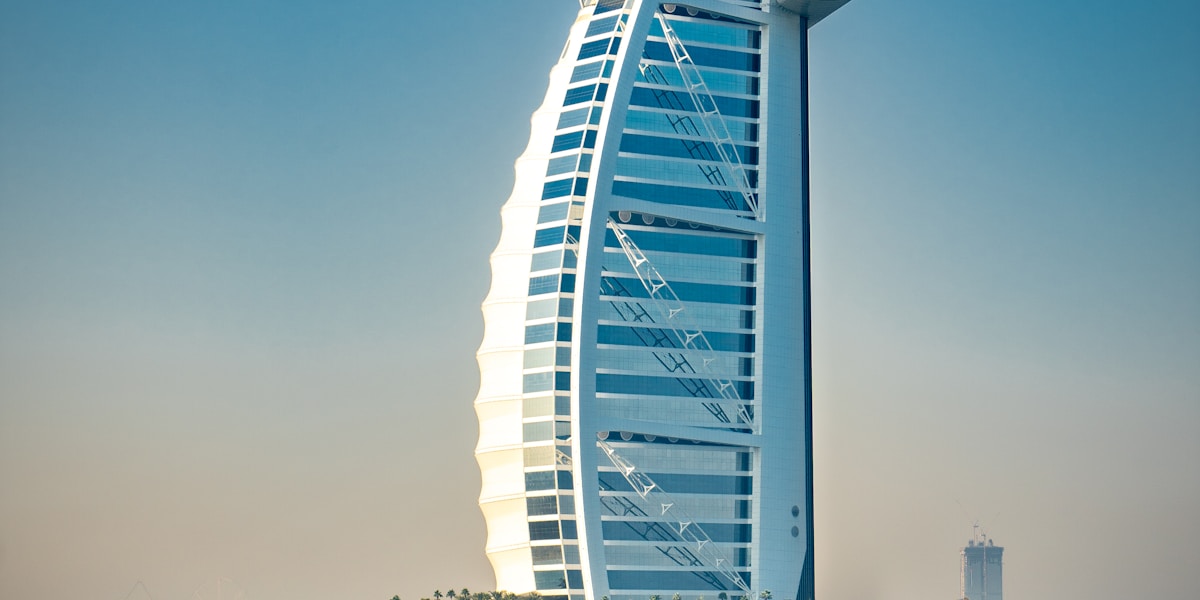
Dubai Delivers 24,800 New Homes in 2026's Biggest Supply Surge
31 July 2026 · Elyora Research
Dubai’s Biggest Home Delivery Wave in Years Hits the Market
Dubai has delivered approximately 24,800 new residential units in what Arabian Business describes as the market’s biggest supply surge in years , a development that is already prompting investors and analysts to reassess assumptions about where prices and rents go from here.
The delivery wave, reported at the end of July 2026, represents a marked acceleration from recent years, when a construction backlog and pandemic-era delays kept completions well below demand. The units span a range of communities and project types, from mid-market apartments in Jumeirah Village Circle and Dubai South to higher-end townhouses and branded residences in Dubai Hills Estate and Mohammed Bin Rashid City. Handovers of this scale have not been seen since the pre-2020 cycle, when an earlier supply glut triggered a correction that lasted several years.
The timing matters. Dubai’s property market has been running hot since 2021, driven by a sustained influx of international buyers, the expansion of the Golden Visa programme, and strong occupier demand from a growing expatriate population. Transaction volumes in H1 2026 exceeded AED 286 billion across more than 86,000 deals, according to market data , a record that reflected both genuine end-user demand and continued investor appetite for off-plan launches.
But price growth has started to moderate in several established communities, and the question now is whether this supply wave accelerates that normalisation or tips certain sub-markets into genuine oversupply.
Where the Pressure Is Being Felt
Not all areas face the same dynamics. Communities where the bulk of new completions are concentrated , particularly volume-driven corridors like Dubai South, Arjan, and parts of JVC , are seeing a measurable uptick in available inventory. Landlords in those areas are reporting that tenants have more negotiating leverage than at any point in the past three years, with some renewal negotiations ending in flat or marginally lower rents rather than the double-digit increases that characterised 2022 and 2023.
The luxury and ultra-luxury segment is a different story. Supply of genuinely high-quality branded residences and waterfront product remains constrained relative to demand, particularly among international buyers from Europe, South Asia, and the GCC who are targeting properties above AED 5 million. In that segment, the pipeline is absorbed faster than it arrives.
The mid-market , two- and three-bedroom apartments in established communities like Dubai Marina, Business Bay, and Jumeirah Lake Towers , sits somewhere between the two. New completions are adding choice, but strong occupier fundamentals mean vacancy is not spiking. Rental yields across Dubai held at approximately 9% as of mid-2026, according to market reports, suggesting that rental income is still tracking well against purchase prices even as both metrics shift.
What the supply data also underscores is how dramatically the off-plan pipeline has grown. Developers including Emaar, DAMAC, Sobha, Nakheel, and a large cohort of newer entrants have been launching projects at an aggressive pace over the past two years, many with three- to five-year handover horizons. The 24,800 units delivered now are the tail end of launches from 2021 and 2022. The projects launched in 2023 and 2024 , when launch volumes were even higher , are still working their way through the construction cycle and will begin reaching the market from 2026 through 2028.
That longer-range supply picture is what some analysts are watching most carefully. Dubai’s population continues to grow , the emirate is targeting 5.8 million residents by 2040 under its urban master plan , and absorption capacity has proven stronger than sceptics expected. But the pace of developer launches has been so prolific that the balance between supply and demand in specific price bands and locations will need to be monitored closely.
What This Means for Investors Buying Now
For investors, the delivery surge is a signal to be more selective rather than a reason to stand back. A rising supply environment rewards specificity: the right developer, the right community, the right unit type. Projects in areas with strong infrastructure, established transport links, and genuine lifestyle amenity , Dubai Hills, Meydan, the Palm, MBR City , are better insulated against softening than high-volume, lower-differentiation corridors.
Off-plan purchases in communities that are still in early development phases carry more supply risk than those near completion in mature neighbourhoods. Payment plan structures also matter more in a supply-rich environment: projects with longer post-handover payment plans effectively lock buyers into an asset during a period when market dynamics could shift. Buyers should stress-test their exit or hold strategy accordingly.
For rental investors, the 9% average yield figure is still attractive by global standards, but yield compression is a realistic medium-term scenario in sub-markets where new stock is arriving faster than tenant demand can absorb it. Focusing on areas with high owner-occupier ratios, strong school and retail catchments, and limited additional pipeline offers the best protection.
Investors navigating Dubai’s evolving supply landscape can explore current primary-market projects at elyora.world/projects to identify where genuine scarcity still exists relative to demand.
Frequently asked questions
How many new homes were delivered in Dubai in 2026?
Dubai delivered approximately 24,800 new residential units in what has been described as the market's largest supply surge in years, according to industry reports published in July 2026. The units span a wide range of communities and price points, from mid-market apartments to higher-end branded residences.
Will Dubai's property prices fall due to new supply in 2026?
Price corrections are more likely in high-volume, lower-differentiation corridors than across the market as a whole. Luxury and waterfront segments remain supply-constrained. Analysts note that strong population growth and occupier demand are absorbing much of the new stock, though mid-market rental pressure is increasing in some areas.
What are rental yields in Dubai in 2026?
Rental yields in Dubai averaged approximately 9% as of mid-2026, according to market data , one of the highest rates among major global property markets. However, yields in high-supply sub-markets may face compression as new completions increase tenant choice and reduce landlords' pricing power.
Get the latest Dubai opportunities
We save your details and an advisor shares off-plan deals that match your goals.